Free Shipping & Return
Money Back Guarantee
Online Support 24/7
Secure Payment

The Role of Pipe Fittings in Efficient Plumbing Systems

If you are planning a plumbing installation or repair, then you might come across the need to buy pipes and fittings. Whether your project is on a small residential scale or involves a large-scale, complex industrial installation, the overall functioning and performance of your plumbing system greatly depends on the right choice and quality of pipe fittings you select. We all know the role of pipes in transporting fluids that span residential, commercial, and industrial purposes. But when you plan the plumbing system of a building, you would need pipe fittings to install, connect, and secure various sections of pipes.

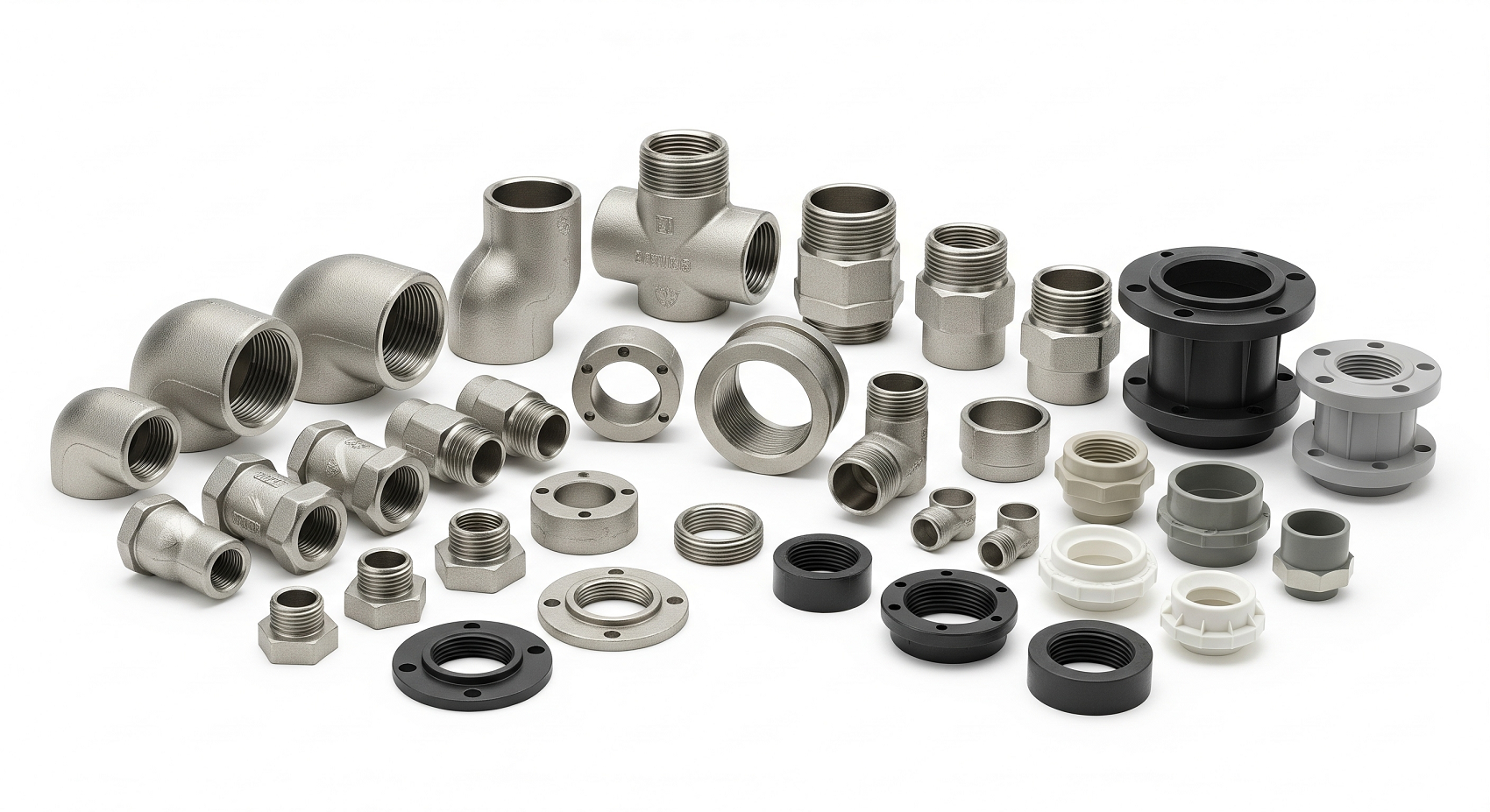
Pipe fittings are essential to build an efficient distribution network within the property. Not just connecting and installing pipelines, but fittings are also used to regulate flow direction, and speed and seal off a pipeline. They are available with pipe fitting suppliers (RZBM) in a diverse range of shapes, sizes, and materials. If you are a DIY plumber, then putting together pipes and fittings as per the plumbing configurations may seem like a complex puzzle. With all the different pipe diameters, materials, and types out there, things can get complicated for an amateur plumber. That is why it is strongly recommended to get a better understanding of the basics of pipes and fittings.

When it comes to choosing the right type of pipe fitting for your plumbing project, the general rule of thumb is to always use the same material as the pipes. The most common materials of pipes available these days include copper, polyethylene (PE), polyvinyl chloride (PVC), CPVC, cross-linked polyethylene (PEX), galvanized steel, stainless steel, fiber cement, and cast iron. Most of these pipe materials can be connected to each other with the right fittings. The fittings must always be compatible with their intended application. For instance, pipe fittings for residential water lines are different from pipelines and wastewater treatments. If the plumbing system has PPR pipes running through the house, then you need PPR pipes and fittings. Installing the wrong pipe fitting type and material can lead to different plumbing issues such as leaks, corrosion, and breakdown. At the same time, employing the right pipe fittings ensures the durability and efficiency of your plumbing system for a long time. The right pipe fitting for the plumbing job depends on its compatibility with the fluid that runs through the system.

The most common types of pipe fittings are as follows:

Elbows

Pipe elbows are the most common fitting type used in plumbing configurations. It is used to change the angle or direction of flow between pipes. You can choose from 90-degree, 45-degree, and 22.5-degree elbow fittings. Using elbow fittings helps to tilt the flow in the direction you want it to go, thereby offering versatility.

Tees

A pipe fitting shaped like a ‘T’ – tees are used for adding branch lines to the main pipeline. You can find various types of pipe tees such as straight, reducing, barred, and wye tees. In addition to installing a 90-degree branch connection, tees are also used to reduce the friction and turbulence of the piping system.

Couplings

As the name implies, this pipe fitting is used to connect two pipes in a straight line. So, if you want to extend the length of the piping system, then you need coupling fittings. There are different types of couplings available with pipe fitting suppliers – full coupling, half coupling, and reducing coupling. Besides joining two lengths of pipe, couplings can be used to repair and fix a broken or leaking pipe as well.

Flanges

These pipe fittings are used to secure connections between pumping structures by creating a tight seal around pipes. Flange fittings are available in different shapes such as – round, square, and rectangular. With flanges, you can assemble or disassemble piping with ease.

Crosses

Cross fittings, as the name suggests are four-way fittings with one inlet and three exits. It resembles a combination of two tee fittings and can be used to connect four different pipes. The four connection points of crosses make them a common choice for fire sprinklers and outdoor irrigation systems.

In addition to the above-listed types, there are also adapters, gaskets, nipples, unions, plugs, caps, bends, and many more.

The type, material, and size of the fitting that suits your project purely depend on the layout and requisites of the piping system. Moreover, seek out products from reputed pipe fitting suppliers that adhere to quality and safety standards.

RZBM is a leading distributor of a diverse range of plumbing products that warrant quality and reliability. If you need assistance in choosing the right pipes and fittings, our team of experts is always glad to help you.
A Brief Guide to Gate, Ball, and Butterfly Valves

Valves play a crucial role in various industrial and non-industrial processes. Regulating the flow of fluid (gases, liquids, fluidized solids, or slurries) through pipelines other equipment, and valves helps to keep industrial operations running smoothly.
Generally, valves have a specific purpose – it is to regulate, direct, or control the movement of substances by either opening or closing the system, or by partially obstructing them. To put it simply, valves serve as gatekeepers that allow or restrict the flow of fluids within a system. You can find the applications of valves in a diverse range of sectors such as oil and gas, chemical processing plants, power generation plants, water supply systems, wastewater treatment, manufacturing facilities, and many more. Industrial valves are designed to handle different types of fluids with precision control over their flow. The right selection of valves, proper installation, and regular maintenance of valves help in improving the overall functionality and safety of industrial operations.

Valves are categorized based on their functional designations such as isolation, non-return, regulation, safety, and special purpose. Let us look into the most common types of valves used in different industrial applications:

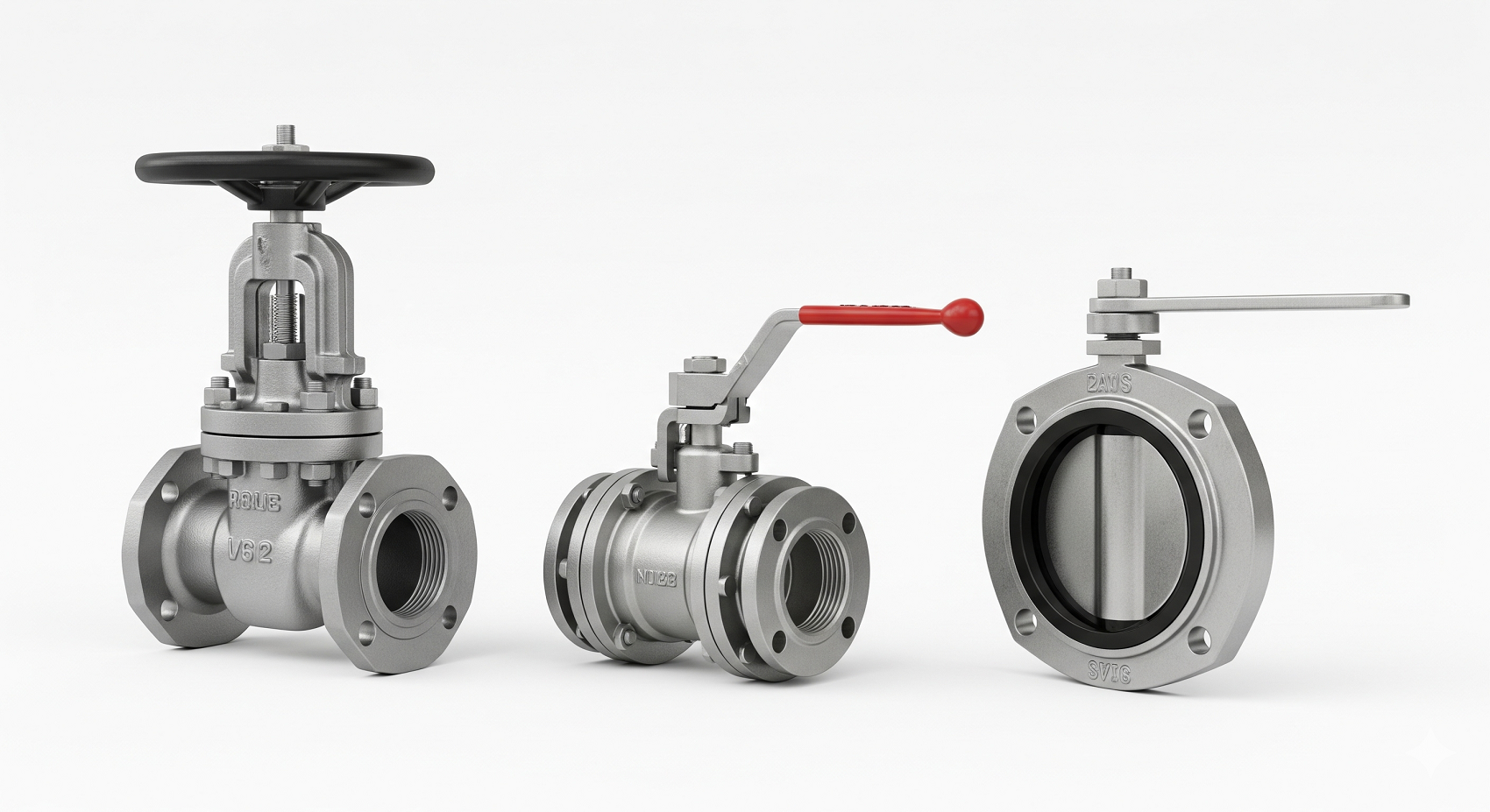
Butterfly valves

Butterfly valves fall into the family of quarter-turn valves. As the name implies, quarter-turn valves function by rotating the valve stems 90 degrees clockwise or anticlockwise direction. Butterfly valves with their quarter-turn rotational functionality are used mainly in pipelines to shut off flow and are often used to regulate the fluid flow as well. Butterfly valves consist of a metal rotating disc positioned in the center of the pipe. The rotation of the metal disc is controlled by an external actuating mechanism through the stem attached to it. The position of the metal disc in this linear-motion valve determines the full or partial flow of the fluid.

Butterfly valves are used in a diverse range of industrial and residential applications, especially in water supply and pumping stations. They also have various use cases in projects requiring flow isolation. What makes butterfly valves a better choice for many industrial and non-industrial applications is their simple construction and compactness. Other key benefits of butterfly valves include their exceptional sealing capabilities for any situation involving low pressure, lower costs, the versatility of size options, smaller installation footprints, and faster actuation speeds.

Ball valves

Ball valves also belong to the category of quarter-turn valves. These unidirectional valves have a hollow, ball-shaped disc that controls the flow of fluid through the system. The movement of the pivoting ball that has been drilled through allows or restricts the passage of fluid. Ball valves can either be actuated using a hand lever or mechanically. Even though ball valves are an ideal choice where tight shut-off is required, they are not recommended for applications that require precision flow. Other notable features of ball valves include easy installation, low maintenance costs, minimal pressure drops, and minimal leakage through wear and tear. The above-listed attributes of ball valves make it a perfect choice for the oil and natural gas industry. Since petrochemical facilities are in remote areas, ball valves with their simplicity of usage and dependability prove to be a perfect choice.

Gate valves

Gate valves, also known as sluice valves or knife valves use a sliding gate or wedge on a threaded operating stem. These linear-motion, isolation valves can allow or restrict the flow of fluid completely. Gate valves only have two service levels – either fully open or fully closed. This means you cannot use gate valves to regulate the flow rate or allow partial flow of fluids. Since gate valves are bidirectional, you can use them to block the flow in both upstream and downstream directions. Tight sealing, minimal pressure loss during operations, relatively simple design, and small fluid resistance of gate valves make it a perfect choice for a wide variety of applications.

There are plenty of valve types available in the market and selecting the right valve for any given industrial operation is crucial. Knowing their features and operations is essential in choosing the right valve type for your project. It is always recommended to gather some basic information on your project requirements before starting your search. You need to check the material, type, and size of the valve that you require. Knowing the chemical compatibility of the liquid or gas type being controlled will help in filtering out the valve material. Other factors include performance requirements – pressure and temperature ranges of the application, actuation method, and maintenance requirements of the valve. Finally, get in touch with a reputed valve supplier. Not only they can offer you the best quality valves, but can also guide you in making an informed decision.

At RZBM, we offer a broad line of competitively priced valves and valve control products, including, but not limited to butterfly valves, ball valves, gate valves, actuators, pressure relief valves, and solenoid valves. If you are not sure about choosing the right valve for your project, get in touch with our team for assistance.