 Free Shipping & Return
 Money Back Guarantee
 Online Support 24/7
 Secure Payment

 Welcome

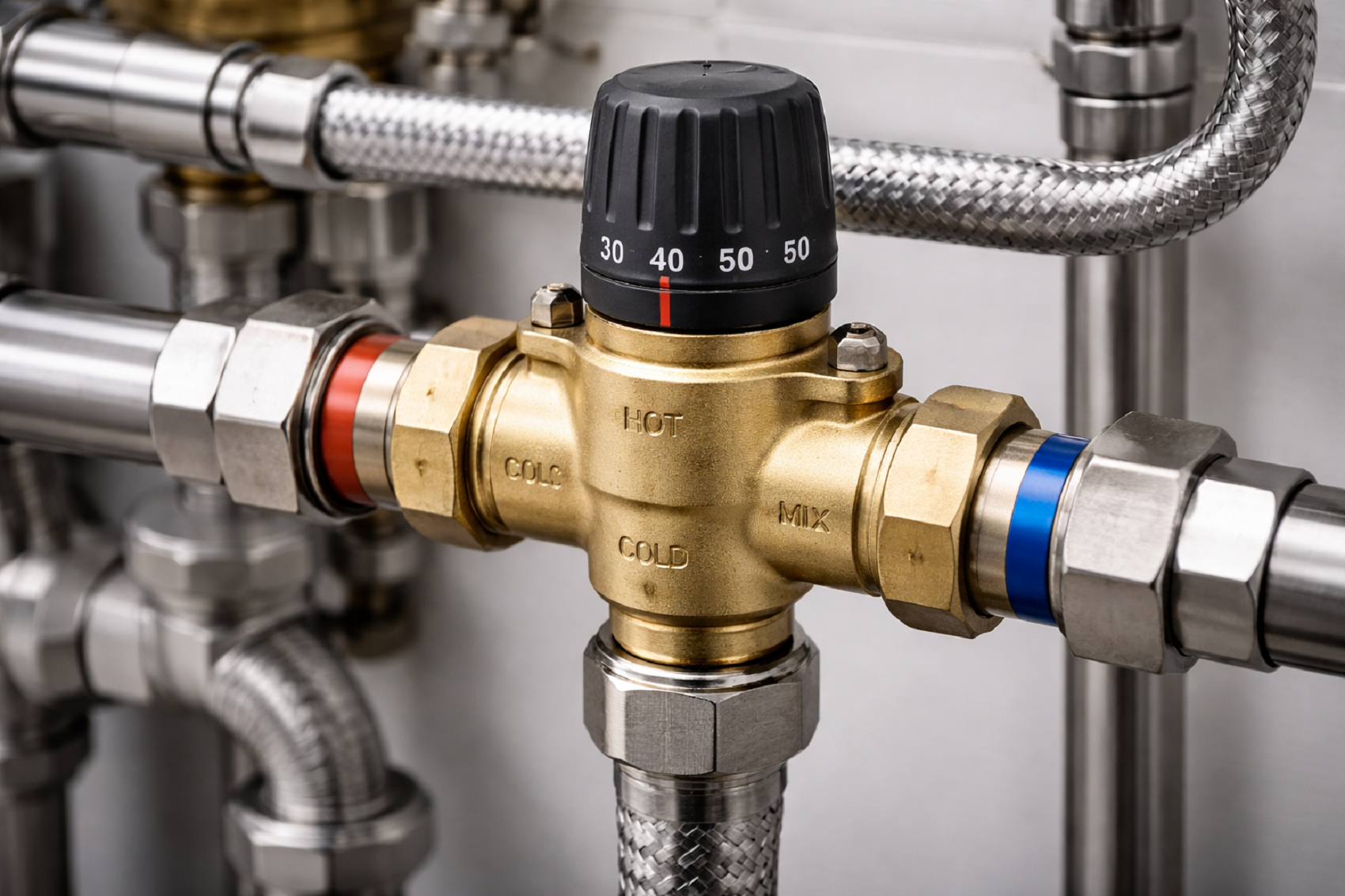
What Is A Thermostatic Mixing Valve?
Category : Blog | February 27, 2026 | By rzbm19Have you ever turned on a tap expecting warm water, only to get a sudden burst of scalding heat or an icy shock instead? In commercial buildings, hotels, hospitals, and even residential projects across the UAE, this is more than just uncomfortable. It can be dangerous and costly.
In this blog, we will clearly explain what a thermostatic mixing valve is, how thermostatic mixing valves work, and how you can choose the right solution for your project with confidence.
Thermostatic Mixing Valve
A Thermostatic Mixing Valve (often abbreviated as TMV) is a precision plumbing device designed to blend hot and cold water to deliver a consistent, safe outlet temperature. Instead of manually adjusting two separate lines and hoping for the best, a Thermostatic mixing valve automatically regulates the mix to maintain a stable set temperature, even if pressure or supply temperature changes.
In many UAE buildings, hot water is stored at high temperatures to prevent bacterial growth, such as Legionella. However, delivering water at those temperatures directly to taps and showers can cause scalding within seconds. A Thermostatic mixing valve solves this by reducing the outlet temperature to a safe and controlled level.
Key Components Of A Tmv
To truly understand how thermostatic mixing valves work, we need to look inside the valve itself. A Thermostatic mixing valve is not just a simple connector. It contains engineered components that react to temperature changes in real time.
Here are the key internal parts:
1. Thermostatic element: This is the core of the valve. It contains a wax or liquid-filled sensor that expands or contracts depending on water temperature.
2. Piston or shuttle mechanism: Connected to the thermostatic element, this part moves to regulate the proportion of hot and cold water entering the mixing chamber.
3. Hot and cold-water inlets: Separate entry points allow controlled blending inside the valve body.
4. Mixing chamber: This is where hot and cold water combine before exiting at the desired temperature.
5. Temperature adjustment knob: Allows you or the installer to set the required outlet temperature.
How A Thermostatic Mixing Valve Regulates Temperature?
The process is automatic and continuous. When hot and cold water enter the valve, the thermostatic element constantly senses the mixed water temperature. If the outlet temperature rises above the set point, the element expands. This movement pushes the piston to reduce hot water flow and increase cold water flow.
If the outlet temperature drops below the set point, the element contracts. The piston then allows more hot water to enter the mixing chamber. This adjustment happens instantly and continuously. The result is a stable water temperature at the outlet.
Hot And Cold Water Mixing Mechanism
The mixing mechanism inside a Thermostatic mixing valveis designed for proportional control. Instead of simply opening or closing one side, the valve balances both supplies dynamically.
Here is how it works in stages:
• Stage 1: Hot and cold water enter through separate ports.
• Stage 2: The thermostatic element measures the blended water temperature in the chamber.
• Stage 3: The piston shifts position to increase or decrease either inlet.
• Stage 4: Mixed water exits at a consistent temperature.
This proportional blending is what ensures comfort and safety in high-occupancy environments such as hospitals and hotels across the UAE.
Automatic Temperature Adjustment
One of the biggest advantages of a Thermostatic mixing valve is automatic adjustment. Manual valves require human intervention. TMVs do not. If there is a sudden drop-in cold-water pressure, the valve immediately senses the temperature rise and restricts hot water flow. If the hot water temperature falls due to heavy usage, the valve compensates by allowing more hot water into the chamber to maintain balance.
Common Applications Of Tmvs
A Thermostatic mixing valve is used in a wide range of systems across the UAE. Common applications include:
• Hospitals and clinics
• Hotels and serviced apartments
• Residential towers
• Schools and universities
• Industrial wash stations
• Labour accommodation facilities
Maintenance Tips For Thermostatic Mixing Valves
Even though a Thermostatic mixing valve is a robust device, regular maintenance ensures long-term performance. We recommend the following practices:
• Periodic temperature testing
• Cleaning internal strainers
• Inspecting seals and moving parts
• Scheduled calibration
Benefits Of Using A Thermostatic Mixing Valve
• Enhanced user safety
• Stable water temperature
• Reduced risk of scalding claims
• Improved system efficiency
• Better compliance with building standards
• Extended plumbing system life
In commercial buildings, even a single scalding incident can result in liability issues. A Thermostatic mixing valve significantly reduces that risk.
Choosing The Right Tmv For Your System
Not all valves are the same. Choosing the correct Thermostatic mixing valve depends on several factors.
You should consider:
• Required flow rate
• Inlet pressure conditions
• Application type
• Temperature range
• Compliance standards
• Maintenance accessibility
If you are designing or upgrading a plumbing system and need expert guidance on selecting the right thermostatic mixing valve, our team at RZBM is here to support you.


