 Free Shipping & Return
 Money Back Guarantee
 Online Support 24/7
 Secure Payment

 Welcome

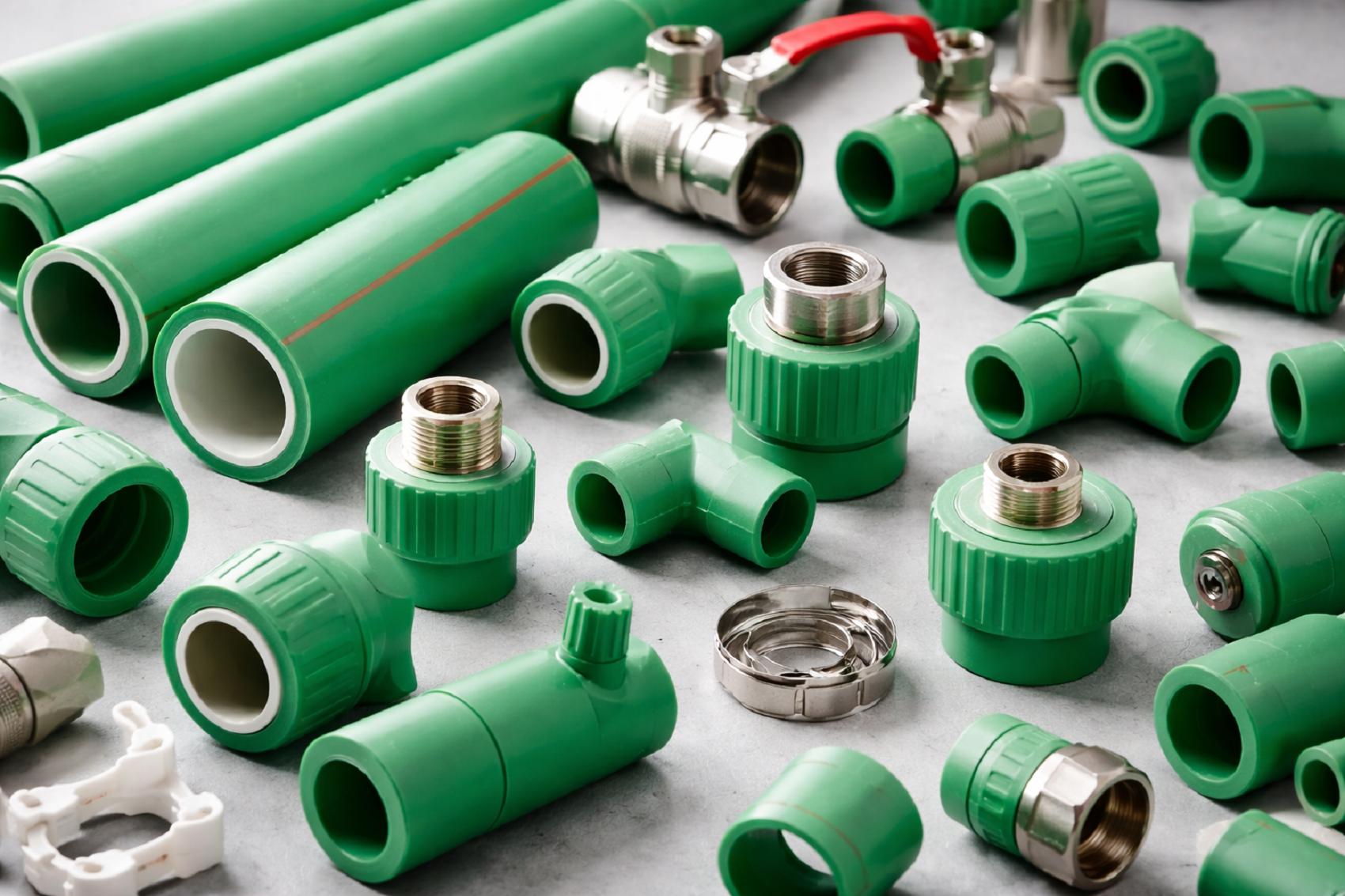
Ppr Pipes and Fittings: Types and Uses
Category : Blog | January 27, 2026 | By rzbm19When you plan a plumbing system, whether it is for your home, a commercial space, or a large-scale project, the quality of pipes and fittings you choose matters more than most people realise, at RZBM, we work closely with contractors, plumbers, and project owners every day. Therefore, we see firsthand how the right PPR pipes and fittings can make installations smoother, systems stronger, and maintenance easier for years to come.
Types Of Ppr Pipes
Greentherm PPR C Pipes: Greentherm PPR C pipes are widely used for standard hot and cold water distribution. These pipes are ideal for residential plumbing, wash areas, kitchens, and shower fitting lines. The material offers excellent resistance to scaling and corrosion. This means your water flow remains consistent and hygienic over time.
From a technical perspective, PPR C pipes perform well within standard temperature and pressure ranges, making them suitable for daily water usage systems.
ThermaPlus PPR FR Pipes: ThermaPlus PPR FR pipes are fibre reinforced. The fibre layer controls linear expansion and improves dimensional stability. This becomes important in hot water risers, concealed lines, and long pipe runs.
At RZBM, we often suggest PPR FR pipes for projects where alignment accuracy matters, such as vertical plumbing shafts and premium shower fitting layouts. Reduced expansion means fewer stress points at joints and supports.
PPR AL Composite Pipes: PPR AL composite pipes include an aluminium layer between PPR layers. This structure provides enhanced strength and thermal resistance. The aluminium barrier also acts as an oxygen diffusion layer, which is important in heating systems.
Technically, these pipes combine the corrosion resistance of plastic with the stability of metal. We often see them used in boiler connections and hot water distribution, where long-term performance is critical.
Pneumatic PPR Pipes: PPR pneumatic pipes are designed specifically for compressed air systems. They handle pressure fluctuations efficiently and offer smooth airflow with minimal friction loss.
While not commonly used for shower fitting, they are important in workshops, service facilities, and technical installations where clean air delivery is required.
PPR CT Pipes: PPR CT pipes are engineered for higher temperature resistance through modified crystallinity. These pipes maintain mechanical strength even under elevated thermal loads.
Types Of Ppr Fittings
Elbows: Elbows are used to change the direction of piping systems. They ensure smooth water flow without pressure loss.
Tees: Tees allow the pipeline to split into multiple directions. They are commonly used in water distribution networks.
Couplings: Couplings are used to connect two straight pipe sections securely and leak-free.
Valves: PPR valves control water flow within the piping system. They are essential for maintenance and safety.
End caps: End caps are used to close the end of a pipeline, preventing leakage and contamination.
Reducers: Reducers connect pipes of different diameters, ensuring smooth transition and consistent flow.
Flanges: Flanges provide detachable connections between pipes and equipment, making installation and maintenance easier.
Crosses: Cross fittings allow four-way connections and are used in complex distribution systems.
Caps: Caps seal pipe openings and are often used during testing or future system expansion.
Practical Uses Of Ppr Pipes And Fittings
Residential plumbing and shower fitting systems: In homes, PPR pipes are commonly used for water supply lines, bathrooms, and kitchens. For shower fitting installations, PPR pipes provide stable pressure and consistent temperature delivery. Their fusion joints prevent hidden leaks behind tiles and walls.
We often guide installers on correct pipe sizing and fitting placement to ensure optimal shower performance without pressure drops.
Underfloor Heating and heating systems: PPR pipes perform well in underfloor heating due to their thermal resistance and flexibility. In radiator and boiler connections, fibre-reinforced and composite pipes help manage heat expansion while maintaining alignment.
Commercial buildings: In offices, hotels, and retail spaces, PPR systems support centralised water distribution. Chilled water systems benefit from the non-corrosive nature of PPR, reducing maintenance and extending system life.
Industrial and technical applications: PPR pipes are used for chemical transport where mild chemicals are involved. Their resistance to many acids and salts makes them suitable for industrial water lines. Pneumatic PPR pipes support compressed air systems with reliable pressure handling.
Water Treatment and healthcare facilities: In water treatment plants, PPR pipes ensure clean and contamination-free distribution. In healthcare facilities, hygiene is non-negotiable. PPR pipes do not leach harmful substances and support sterile water systems.
Outdoor and specialised applications: UV-resistant PPR pipes are used in outdoor plumbing and rainwater harvesting systems. Sprinkler systems benefit from smooth internal surfaces that ensure uniform water distribution.
Conclusion
Choosing the right PPR is about understanding how materials behave under real conditions and how every joint contributes to system performance. Whether you are planning a simple shower fitting upgrade or a complete plumbing network, the right choices today save time, cost, and stress tomorrow.


