 Free Shipping & Return
 Money Back Guarantee
 Online Support 24/7
 Secure Payment

 Welcome

Advantages And Disadvantages Of Diaphragm Valves
Category : Blog | February 25, 2026 | By rzbm19Ever installed a valve that looked perfect on paper, only to find it struggling with media compatibility, leakage, or maintenance issues later on? If you work in industrial projects across the UAE, you know how critical the right valve selection can be. In this blog, we will walk you through the real-world advantages and disadvantages of Diaphragm Valves, so you can confidently choose what works best for your system and avoid costly mistakes.
Diaphragm Valves
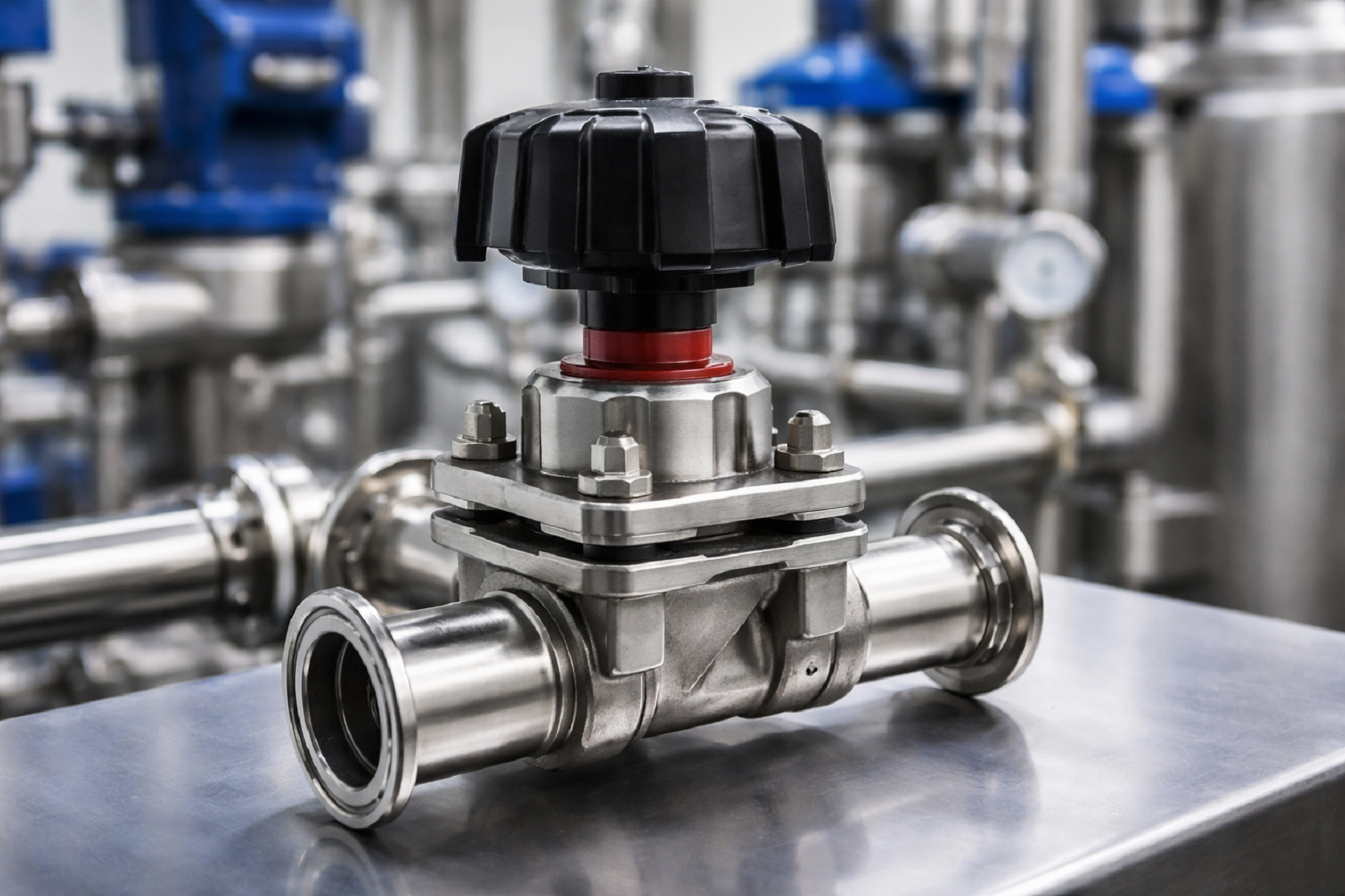
Diaphragm Valves are shut off and control valves that use a flexible diaphragm to regulate the flow of fluids. Instead of relying on a traditional seat and disc arrangement, these valves use a soft elastomer or polymer membrane to press against a weir or seat, effectively sealing the flow path.
Key Components And Working Principle
To understand the Diaphragm valve advantages, we first need to look at how they work.
Components
• Valve body
• Flexible diaphragm
• Compressor or piston
• Bonnet
• Actuator or handwheel
Working principle
Just like pressing your thumb down on the opening of a garden hose to stop the water. That’s the basic idea. When you turn the handwheel, the actuator pushes the compressor down, forcing the diaphragm against the weir (a raised lip in the body) to stop flow. To open it, you lift the compressor, and the diaphragm pulls away, allowing fluid to pass through freely. It’s simple, effective, and keeps the messy stuff away from the moving parts.
The biggest technical advantage here is that the operating mechanism is separated from the process media. This prevents contamination and protects internal moving parts from corrosion.
For industries in the UAE dealing with aggressive chemicals or treated water, this isolation is one of the major Benefits of diaphragm valves.
Advantages Of Diaphragm Valves
Now, let’s talk about why you should consider these for your next project. The Diaphragm valve advantages are numerous, especially when you consider the demanding environments we face in the Gulf region.
– Superior leak-proof operation: Because the diaphragm creates a perfect seal between the bonnet and the body, there’s virtually zero chance of stem leakage. This is a massive win for safety and environmental compliance, especially when handling volatile or toxic substances.
– Exceptional corrosion resistance: In the UAE, we deal with a lot of aggressive media, from acids in chemical plants to high-chloride seawater in desalination. Diaphragm valves, especially those lined with PTFE or rubber, offer incredible resistance, ensuring a long service life without rusting or degrading.
– Hygienic and contamination-free: Since the operating mechanism is completely isolated, there is no risk of lubricants or moving parts contaminating your media. This makes them the gold standard for the pharmaceutical, food, and beverage industries. They are designed to be clean and keep your product pure.
– Low maintenance requirements: With fewer moving parts exposed to the media, there’s less that can go wrong. Maintenance is usually as simple as replacing the diaphragm itself, which can often be done quickly without even removing the valve body from the pipeline.
– Handles difficult fluids: Are you dealing with slurries, viscous fluids, or fibrous materials? Traditional valves can get clogged. The streamlined design of a diaphragm valve allows these fluids to pass through.
Disadvantages Of Diaphragm Valves
– Pressure and temperature limitations: The flexible diaphragm is the valve’s strength, but also its weakness. They are generally not suitable for very high-pressure systems (typically maxing out around 300 psi) or extreme temperatures (usually between -60°F and 450°F, depending on the material). Pushing beyond these limits can damage the diaphragm.
– Not ideal for precise throttling: While they are fantastic for on/off service and basic flow control, they aren’t the best choice for applications requiring extremely precise flow modulation. Other valve types, like globe or control valves, offer better accuracy for fine-tuning flow rates.
– Limited application range: Because of the pressure and temperature restrictions, you can’t use them everywhere. In high-pressure steam lines or high-pressure hydraulic systems, they simply won’t hold up.
– Diaphragm wear and tear: The diaphragm is a consumable part. Over time, with constant flexing and exposure to media, it will wear out and need replacement.
Applications Of Diaphragm Valves
1. Water treatment plants
• Chemical dosing lines
• Filtration systems
• Sludge handling
2. Chemical processing
• Acid transfer lines
• Corrosive fluid handling
• Storage tank isolation
3. Food and beverage industry
• Hygienic flow control
• CIP systems
• Non-contamination requirements
4. Pharmaceutical manufacturing
Final Thoughts On Advantages And Disadvantages Of Diaphragm Valves
When we evaluate the Advantages and Disadvantages of Diaphragm Valves, the conclusion is clear. They are highly effective for corrosive, hygienic, and slurry-based applications. However, they are not designed for extreme pressure or high-temperature systems.
If you focus on proper material selection, correct sizing, and realistic operating conditions, Diaphragm Valves can deliver reliable performance and long service life in UAE industrial environments.


