 Free Shipping & Return
 Money Back Guarantee
 Online Support 24/7
 Secure Payment

 Welcome

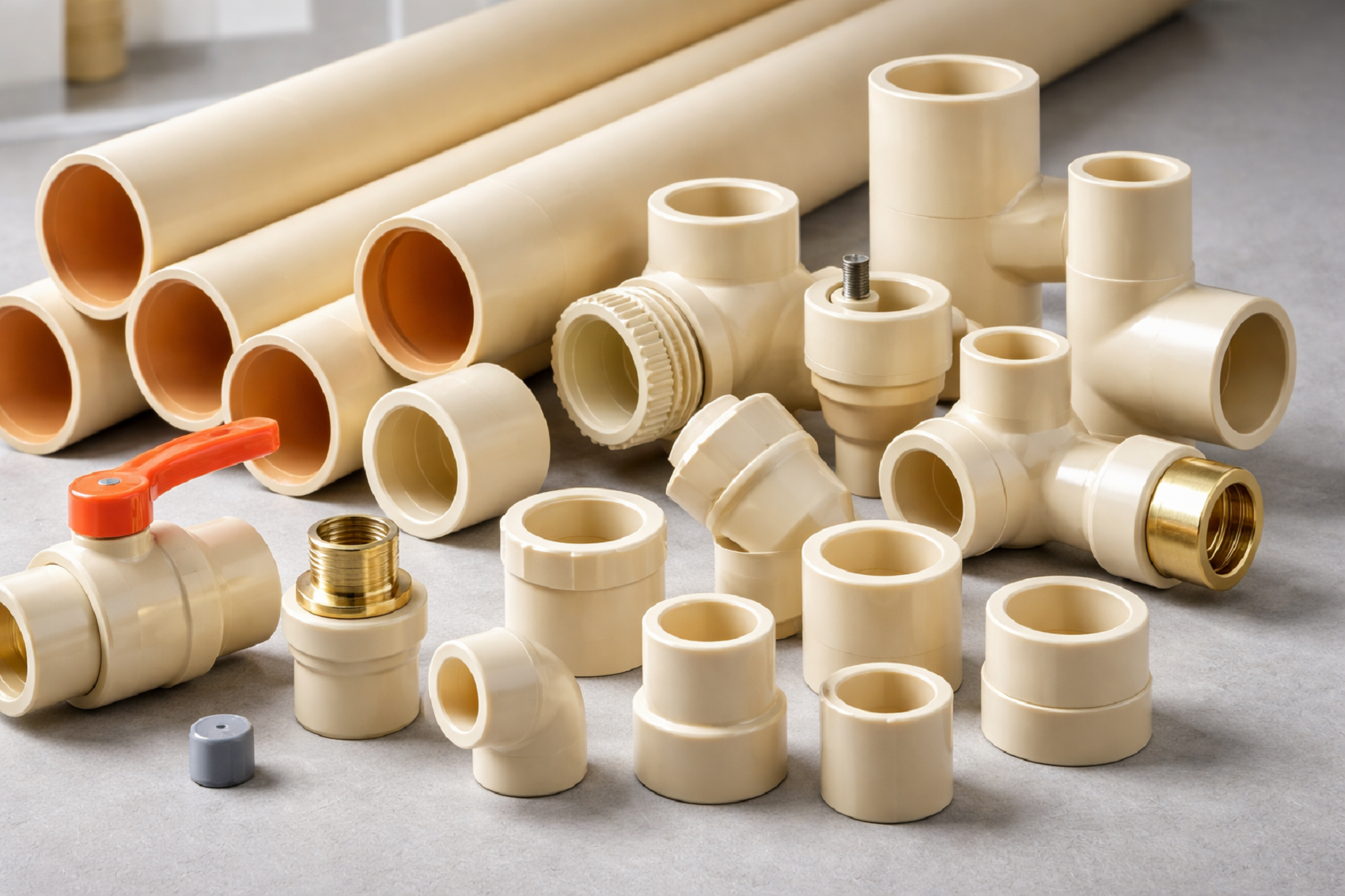
Benefits Of Cpvc Pipes And Fittings
Category : Blog | March 31, 2026 | By rzbm19When we plan a plumbing system for a home, commercial building, or industrial space, the materials we choose matter more than we often realise. Pipes carry water every single day, and they need to handle pressure, temperature changes, and long-term usage without creating problems like corrosion or leakage. This is where CPVC pipes have gained strong attention among engineers, contractors, and property owners.
In this blog, we will explore the benefits of CPVC pipes and fittings, understand what makes them different, and look at their applications in modern plumbing systems. By the end of this guide, you will clearly understand why CPVC pipes have become a preferred choice for many projects and how they can improve the durability and efficiency of your plumbing system.
What Are CPVC Pipes And Fittings?
CPVC pipes and fittings stand for Chlorinated Polyvinyl Chloride. It is like the upgraded, stronger cousin of standard PVC. Through a specific manufacturing process, the material is enhanced to withstand much higher temperatures and pressures.
When you look at a CPVC piping system, you are looking at a solution designed specifically for demanding environments. Unlike metal pipes that can react with the water or rust over time, CPVC plumbing pipes offer a clean, smooth interior. This means the water travelling through them stays pure, and the pipes themselves stay strong.
Key Benefits of CPVC Pipes And Fittings And Why They Are Used In Plumbing Systems
When evaluating the benefits of CPVC pipes and fittings, several technical advantages stand out.
• High temperature resistance: Handles hot water up to 93°C, making it ideal for domestic and commercial hot water systems.
• Corrosion resistance: Does not rust or scale like metal pipes, remaining stable even after years of water exposure.
• Smooth inner surface: Reduces friction for efficient flow, maintaining consistent water pressure and lowering pumping energy over time.
• Long service life: Delivers decades of reliable performance when installed properly.
• Lightweight structure: Lighter than metal for simpler transport, handling, and faster, more cost-effective installation.
• Chemical stability: Resists chemicals in water systems, suitable for both residential plumbing and select industrial environments.
Common Applications of CPVC Pipes And Fittings
Thanks to their strength and reliability, CPVC pipes are used across residential, commercial, healthcare, and industrial sectors. They serve as water supply lines in homes, support large-scale distribution in hotels and restaurants, provide non-corroding, contamination-free plumbing in hospitals, and handle chemical transport in industrial facilities where metal piping would fail.
Cpvc Pipes For Hot And Cold-Water Systems
We appreciate the dual capability of CPVC pipes, which offer unmatched versatility for both hot and cold-water systems. For cold water, the material prevents metallic tastes or odours, while for hot water, it truly excels, maintaining structural integrity where standard PVC would soften and deform. Withstanding consistent temperatures up to 200 degrees Fahrenheit, CPVC is ideal for water heaters, solar heating systems, and industrial hot water lines, eliminating concerns about heat-related weakening.
Cpvc Pipes Vs Other Plumbing Materials
While copper, galvanised steel, and PEX are common options, CPVC stands apart. It is more cost-effective than copper, with a safer, faster solvent cement weld instead of an open flame. Unlike heavy, rust-prone steel, CPVC is lightweight and easy to handle. And compared to PEX, it offers greater rigidity and durability, is resistant to rodents and UV exposure, making it the superior choice for demanding installations.
Factors To Consider When Choosing CPVC Pipes And Fittings
If you are planning a project, there are a few technical aspects you should keep in mind to ensure you get the most out of your system.
• Check the pressure rating: Match the pipe schedule to the pressure demands of your pump and building height.
• Assess raw material quality: Not all CPVC pipes are equal. Buy from RZBM that meets rigorous international standards with high-grade compounds for system longevity.
• Account for expansion and contraction: CPVC expands slightly with heat, so design the layout with proper supports to allow for movement and prevent stress on joints over time.
Conclusion
Choosing the right material for your plumbing is about more than just moving water from point A to point B. It is about protecting your investment, ensuring the health of your family or occupants, and avoiding the headache of constant repairs. A reliable CPVC piping system gives you the freedom to live your life without worrying about leaks, corrosion, or water contamination. It is the silent guardian of your property.
Here at RZBM, we are passionate about delivering quality and reliable CPVC pipes in UAE.
FAQ
Are CPVC pipes good for a hot water supply?
Yes, absolutely. CPVC pipes and fittings are specifically engineered to handle hot water applications. They can withstand continuous temperatures up to 200 degrees Fahrenheit without deforming or losing structural integrity, making them the ideal choice for water heaters and solar water heating systems.
Where are CPVC pipes commonly used?
CPVC pipe applications are extensive. They are commonly used in residential plumbing for hot and cold-water distribution, in high-rise buildings for riser systems, in commercial kitchens, hospitals for medical gas and water lines, and in fire sprinkler systems due to their flame resistance and high-pressure handling capabilities.
How long do CPVC pipes last?
When properly installed and used within their designed parameters, CPVC pipes and fittings have a proven lifespan of over 50 years. Their resistance to corrosion, chemicals, and physical wear ensures they maintain their integrity far longer than traditional metal piping systems.


