 Free Shipping & Return
 Money Back Guarantee
 Online Support 24/7
 Secure Payment

 Welcome

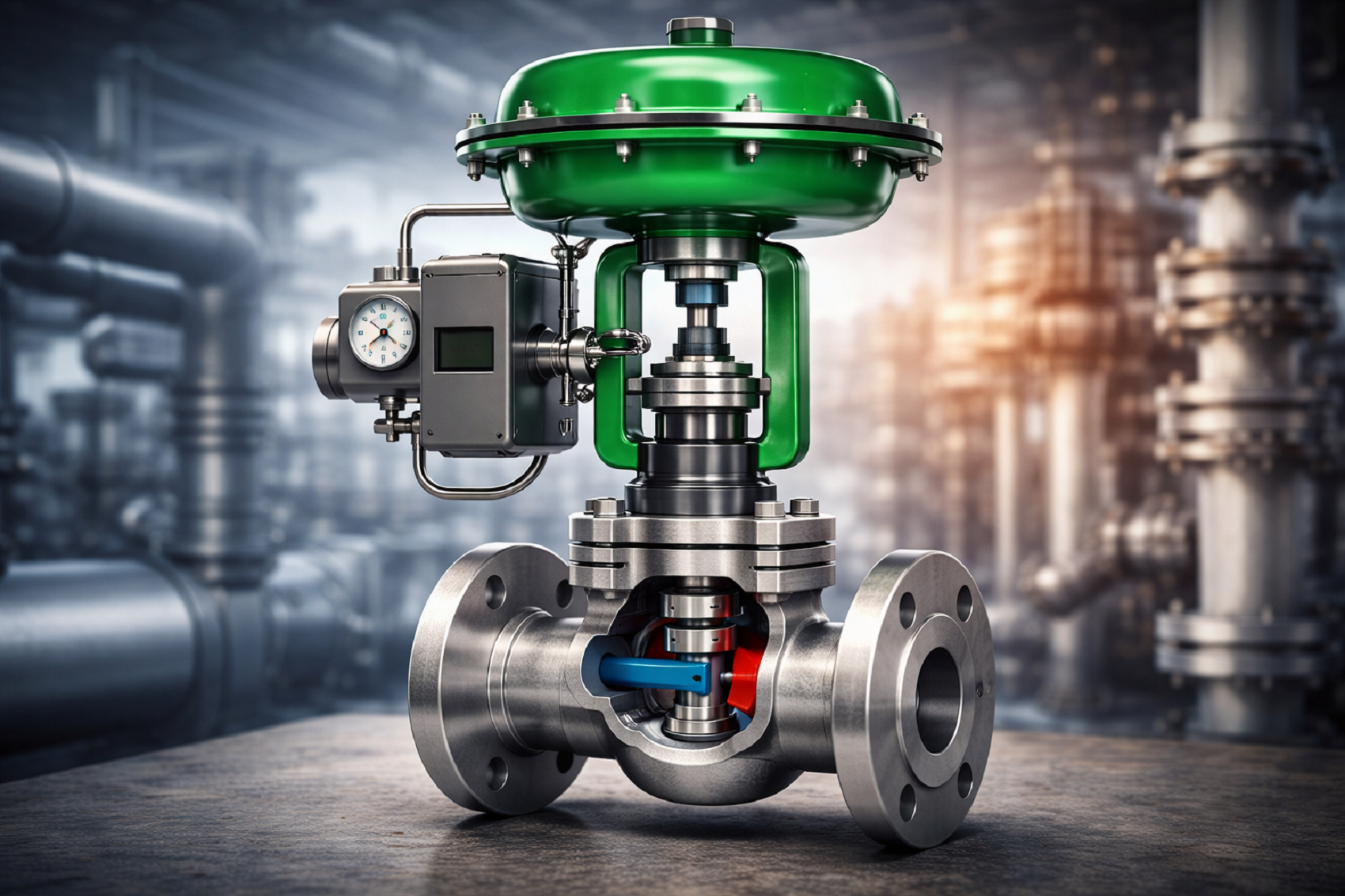
What Is A Control Valve? An Introduction For Modern Industries?
Category : Blog | December 24, 2025 | By rzbm19Control Valve
A control valve is a device used to regulate the flow of fluids such as water, steam, gas, or chemicals within a system. It does this by opening, closing, or partially blocking the flow path based on signals it receives from a control system.
The main purpose of a control valve is simple. It keeps your process running at the desired level. That could mean maintaining the right pressure, controlling temperature, managing flow rate, or ensuring safe operation.
At RZBM, we see control valves as decision makers in a process. They respond continuously to changes and make adjustments in real time so your system stays stable and efficient.
How Control Valves Work?
Understanding how a control valve works does not have to be complicated. In simple terms, a control valve adjusts how much fluid passes through it.
Here is how it usually happens.
• A sensor measures a condition such as pressure, temperature, or flow.
• That information is sent to a controller.
• The controller compares the actual value with the desired value.
• If there is a difference, the controller sends a signal to the control valve.
• The valve then moves to open more or close slightly to correct the process.
This movement can be powered by electric, pneumatic, or hydraulic actuators. At RZBM, we focus on supplying control valves that respond accurately and reliably, even in demanding industrial environments.
Types Of Control Valves
There are several types of control valves, each designed for specific applications. Choosing the right type is critical for performance and safety.
• Globe valves: These are commonly used for precise flow control. They are ideal when accurate regulation is required.
• Ball valves: Ball valves provide quick opening and closing and are often used when a tight shutoff is important.
• Butterfly valves: These are lightweight and suitable for large flow applications. They are widely used in water and HVAC systems.
• Diaphragm valves: These valves are preferred when handling corrosive or sensitive fluids because they isolate the fluid from moving parts.
• Plug valves: Plug valves are used where simple and robust flow control is required, often in oil and gas applications.
At RZBM, we help you select the right valve type based on your system requirements, operating conditions, and long-term performance goals.
Key Components Of A Control Valve
Every control valve consists of several key components that work together.
• The valve body is the main structure that holds the internal parts and connects to the pipeline.
• The trim includes internal parts like the plug, seat, and stem that directly control flow.
• The actuator provides the force needed to move the valve.
• The positioner ensures the valve opens to the correct position based on the control signal.
• Seals and packing prevent leakage and protect system integrity.
Each component must be well designed and properly matched. At RZBM, we pay close attention to material quality and compatibility to ensure long-lasting performance.
Applications Of Control Valves
Control valves are used across many industries and applications.
• Oil And Gas Facilities: They regulate flow and pressure in processing and transport systems.
• Water Treatment Plants: They manage flow rates and maintain consistent pressure.
• Power Generation: They control steam and cooling systems.
• Manufacturing Plants, which help maintain precise process conditions.
• HVAC Systems, they regulate temperature and airflow for comfort and efficiency.
From small systems to large-scale industrial operations, control valves are essential. RZBM supports a wide range of industries by supplying reliable control valve solutions tailored to each application.
Benefits Of Using Control Valves
Using the right control valve offers many benefits that directly impact your operations.
• Improve process accuracy by maintaining consistent conditions.
• Enhance safety by preventing overpressure or system failures.
• Increase efficiency by reducing energy and material waste.
• Extend equipment life by reducing stress on system components.
• Support automation and smart control systems.
At RZBM, we believe that a well-chosen control valve is an investment. It helps you reduce downtime, lower maintenance costs, and achieve better overall system performance.
Common Problems And Troubleshooting
Like any mechanical component, control valves can face issues over time. Understanding common problems helps you act quickly.
• Leakage is often caused by worn seals or improper seating.
• Sticking or slow response may result from dirt buildup or actuator issues.
• Noise and vibration can occur due to incorrect sizing or high pressure drops.
• Inaccurate control may be linked to calibration or positioner problems.
Regular inspection, proper installation, and correct valve selection can prevent most of these issues. At RZBM, we guide our customers on maintenance best practices and help them choose valves that suit their operating conditions from the start.
Importance Of Control Valves In Industry
Control valves may not always be visible, but their impact is enormous. They keep processes stable, systems safe, and operations efficient. Without control valves, modern industries would struggle to maintain consistency and reliability.
At RZBM, we understand that every valve plays a role in a larger system. That is why we focus on quality, performance, and technical support. Our goal is to help you build systems that work smoothly today and continue performing tomorrow.
If you are planning a new project or upgrading an existing system, choosing the right control valve makes all the difference.


